Preparing our tax returns is often confusing and sometimes anxiety provoking. The constant changes in law and the complicated forms make doing the preparation ourselves more and more difficult, but deciding to have someone else do them is also a problem.
We don't always know that the people doing our taxes are competent, and that we are only paying what we should. To that problem, we add the variety of charges possible for these services. They can range from $50 to $400 for a fairly basic return.
If you use a service, be sure to check the Better Business Bureau first to see if others have lodged complaints. Ask for references and never be afraid to ask questions or to negotiate a better charge. Most companies are receptive to negotiation because they want your business. The worst thing that can happen is that they say no.
If you have a moderate or low income, consider AARP's free tax service. Yes, free! In fact, AARP is the nation's largest free service. The organization's volunteers offer their skills and expertise, meet locally with taxpayers who need to bring their records to the appointments, and submit electronically. AARP Tax-Aide locations are open from late January/early February through April 15. Visit aarp.com to find AARP Tax-Aide sites.
AARP pays special attention to those who are 60 and over. In addition to help with taxes, AARP offers estate and retirement planning services.
April 15 is just around the corner, but it's not too late to take advantage of this valuable service. Go to your appointment as prepared as possible. Organize your receipts. List possible deductions: medical, prescription, work/business expenses, child care, dues, property costs, interest/dividend payments, and charitable donations are some general categories. Staple your receipts to your list and store them with a copy of your return in a dated file folder. If the IRS comes knocking, you're prepared.
Of course, I hope you never experience an audit, and I wish you a really huge refund!
Saturday, March 27, 2010

Saturday, March 13, 2010
Grandparenting Via the Web
My daughter and her family are overseas now. They have called twice via webcam. What incredible technology. It is such a blessing to be able to see them all. I wish that all who have loved ones who live, work or serve America far away would have access to computers with cameras.
If you don't own a computer, you might consider buying a HP Notebook. It is a small laptop with a built-in microphone and camera, so visually communicating with anyone throughout the world is really easy. The notebook computers range from $200 to $300 and can do just about anything a larger computer can do, but it is much more portable. I just love being able to slip it into my small purse, work on my word documents where ever I want, and get onto the internet anywhere.
It is especially wonderful to see my grandchild over the webcam. She is eight months old, adorable and already brilliant (I'm not at all prejudiced.). She is also changing before my eyes, and I don't want her to forget her Grandma, so I want to use my time with her especially well.
I think I'm going to start reading to her. She can see the pictures in the book, so that should keep her attention, and I hope the process will reinforce remembering my voice. From the time she was born, I sang to her. Though my voice is certainly not what it once was, miraculously, it used soothe her and put her to sleep. I think I will also sing those songs to her. Anything at all to keep reinforcing her memory of me.
I think that if Lily and I can connect actively and on a regular basis, the less I will feel the sadness about they're being so far away. Got any other ideas?
If you don't own a computer, you might consider buying a HP Notebook. It is a small laptop with a built-in microphone and camera, so visually communicating with anyone throughout the world is really easy. The notebook computers range from $200 to $300 and can do just about anything a larger computer can do, but it is much more portable. I just love being able to slip it into my small purse, work on my word documents where ever I want, and get onto the internet anywhere.
It is especially wonderful to see my grandchild over the webcam. She is eight months old, adorable and already brilliant (I'm not at all prejudiced.). She is also changing before my eyes, and I don't want her to forget her Grandma, so I want to use my time with her especially well.
I think I'm going to start reading to her. She can see the pictures in the book, so that should keep her attention, and I hope the process will reinforce remembering my voice. From the time she was born, I sang to her. Though my voice is certainly not what it once was, miraculously, it used soothe her and put her to sleep. I think I will also sing those songs to her. Anything at all to keep reinforcing her memory of me.
I think that if Lily and I can connect actively and on a regular basis, the less I will feel the sadness about they're being so far away. Got any other ideas?
Saturday, March 6, 2010
Joint Aches
I have been really struggling with shoulder pain and what has turned out to be referred pain in my wrist. Simple things like lifting a book and hooking a bra have become monumental problems.
Friends suggested it was my rotator cuff and that I would probably need surgery, but the orthopedic surgeon disagreed with my friends' diagnosis. He said, after x-rays and an exam, that he thought it was a frozen shoulder. Who knew such a ailment could happen? It turns out that I have been protecting my neck from the chronic pain I have had since a discectomy. Though, protection was really more like pain avoidance, and I did that by not moving my shoulder. I didn't move my shoulder because every time I did, it hurt, and I'm no dummy.
The only good thing about all this has been that I learned that the reason for the pain wasn't just because I was getting older. Joint pain is not a natural consequence of aging. Among women, hormonal imbalance and chronic inflammation are far more often the culprits.
Chronic inflammation prevents cell regeneration and repair and gradually tears down tissue including those in the joints. Reduced levels of estrogen can contribute to the problem. Estrogen acts as a natural anti-inflammatory. When levels fall off prior to and during menopause, we can begin to experience the ill effects of chronic inflammation.
Diet can cause chronic inflammation. One that is high in carbs and sugars and low in essential fatty acids prolongs high levels of insulin which disrupts cellular metabolism and spreads inflammation.
Stress is also a factor. The hormone cortisol is released when we are under stress, and too much cortisol spreads inflammation.
Lastly, when we stop moving something to prevent pain somewhere else, we can and will get into trouble, and the resolution is horrifyingly painful exercise, doing over and over just what are the most painful movements.
The key here is prevention---moving all our parts on a regular basis and lubrication of the joints. Essential fatty acids are very effective at fighting inflammation. You can increase your omega-3 intake by eating fish, but be careful to choose smaller species, like tilapia, that are low in mercury.
Lifestyle changes like stress relief and moderate exercise can help regulate cortisol levels and reduce the inflammation in your body. A regular exercise program will also help you maintain a healthy weight and prevent excess wear and tear on your hips and knees.
In the mean time, I am on anti-inflammatory medication and really painful exercise. I'll let you know how it goes.
Friends suggested it was my rotator cuff and that I would probably need surgery, but the orthopedic surgeon disagreed with my friends' diagnosis. He said, after x-rays and an exam, that he thought it was a frozen shoulder. Who knew such a ailment could happen? It turns out that I have been protecting my neck from the chronic pain I have had since a discectomy. Though, protection was really more like pain avoidance, and I did that by not moving my shoulder. I didn't move my shoulder because every time I did, it hurt, and I'm no dummy.
The only good thing about all this has been that I learned that the reason for the pain wasn't just because I was getting older. Joint pain is not a natural consequence of aging. Among women, hormonal imbalance and chronic inflammation are far more often the culprits.
Chronic inflammation prevents cell regeneration and repair and gradually tears down tissue including those in the joints. Reduced levels of estrogen can contribute to the problem. Estrogen acts as a natural anti-inflammatory. When levels fall off prior to and during menopause, we can begin to experience the ill effects of chronic inflammation.
Diet can cause chronic inflammation. One that is high in carbs and sugars and low in essential fatty acids prolongs high levels of insulin which disrupts cellular metabolism and spreads inflammation.
Stress is also a factor. The hormone cortisol is released when we are under stress, and too much cortisol spreads inflammation.
Lastly, when we stop moving something to prevent pain somewhere else, we can and will get into trouble, and the resolution is horrifyingly painful exercise, doing over and over just what are the most painful movements.
The key here is prevention---moving all our parts on a regular basis and lubrication of the joints. Essential fatty acids are very effective at fighting inflammation. You can increase your omega-3 intake by eating fish, but be careful to choose smaller species, like tilapia, that are low in mercury.
Lifestyle changes like stress relief and moderate exercise can help regulate cortisol levels and reduce the inflammation in your body. A regular exercise program will also help you maintain a healthy weight and prevent excess wear and tear on your hips and knees.
In the mean time, I am on anti-inflammatory medication and really painful exercise. I'll let you know how it goes.
Saturday, February 27, 2010
The Big 60
Well...this was the week for turning 60, and although they say it is the new 40, I don't look or feel 40. Now...I certainly don't look as old as my grandmom or mom did at this age, and both were lovely women, and I don't feel like I'm ready for the home, but I've got some wrinkles, some aches and pains that didn't exist before, some body parts that seem like they're racing to my toes.
My kids are grown now and launched into successful and independent lives that don't require my continual involvement. My parents, whom I cared for for years have passed away; many of my family members and closest friends live all over the country now, and I could retire from my 20 year teaching career next year. That's a lot of really important jobs in my life that have changed radically or come to an end.
I remember, when I was in my twenties, thinking that 60 was ancient--that it was the end of life, but now that I am 60, I certainly don't feel finished. So what's my plan? Should we reinvent ourselves? Can we reinvent ourselves?
Should we--Yes!
Every decade brings with it new challenges, but also greater wisdom, understanding, and peace. I have friends who tell me that the best time in life has been their seventies! They say that it's because they finally let go--of grudges, pretense, and self-criticism. I don't want to wait until my seventies to give myself those gifts.
Can we--Yes!
We can reinvent ourselves in a variety of ways. The obvious one is to work on health and appearance. If we aren't exercising, we must begin--not just to look better but to feel better, and to protect our physical and mental health. It's never too late and with each year, it becomes even more important. In my book, Living Agelessly, I even tell you how to "breathe your way" to better physical health.
If we have issues with our skin (generally drying out) or hair (usually thinning out), this is the time to do something about it. Companies are creating medicines and products every day just for the babyboomers. They know that they're are millions of us, and that we want to feel and look younger for as long as possible, so they're working hard to give us products to diminish the look of wrinkles, to lighten age spots, and to even out skin tone. We've never had more options to protect our skin from the ravages of aging, and they're affordable now.
And last...if we want to feel younger, we need to keep challening our mind and to create a life style that is dynamic. If you've retired, find new work--perhaps in an entirely new field doing something you've always wanted to do. If you're still working, alter your job where you can--take on new responsibilities, go for that promotion or mentor new people. There's nothing more energizing than feeling valued.
If you don't want to work any more, volunteer. Helping others releases endorphins (the feel good hormone) in the brain. Being needed makes us feel young.
And most importantly, adjust your attitude. Act younger and feel younger. They say "Fake it till you make it!" I think there's something to that adage. You can't feel bad or old if you're acting positively and energetically. The reality will have to eventually catch up with the behavior.
My kids are grown now and launched into successful and independent lives that don't require my continual involvement. My parents, whom I cared for for years have passed away; many of my family members and closest friends live all over the country now, and I could retire from my 20 year teaching career next year. That's a lot of really important jobs in my life that have changed radically or come to an end.
I remember, when I was in my twenties, thinking that 60 was ancient--that it was the end of life, but now that I am 60, I certainly don't feel finished. So what's my plan? Should we reinvent ourselves? Can we reinvent ourselves?
Should we--Yes!
Every decade brings with it new challenges, but also greater wisdom, understanding, and peace. I have friends who tell me that the best time in life has been their seventies! They say that it's because they finally let go--of grudges, pretense, and self-criticism. I don't want to wait until my seventies to give myself those gifts.
Can we--Yes!
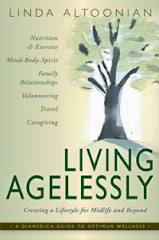
We can reinvent ourselves in a variety of ways. The obvious one is to work on health and appearance. If we aren't exercising, we must begin--not just to look better but to feel better, and to protect our physical and mental health. It's never too late and with each year, it becomes even more important. In my book, Living Agelessly, I even tell you how to "breathe your way" to better physical health.
If we have issues with our skin (generally drying out) or hair (usually thinning out), this is the time to do something about it. Companies are creating medicines and products every day just for the babyboomers. They know that they're are millions of us, and that we want to feel and look younger for as long as possible, so they're working hard to give us products to diminish the look of wrinkles, to lighten age spots, and to even out skin tone. We've never had more options to protect our skin from the ravages of aging, and they're affordable now.
And last...if we want to feel younger, we need to keep challening our mind and to create a life style that is dynamic. If you've retired, find new work--perhaps in an entirely new field doing something you've always wanted to do. If you're still working, alter your job where you can--take on new responsibilities, go for that promotion or mentor new people. There's nothing more energizing than feeling valued.
If you don't want to work any more, volunteer. Helping others releases endorphins (the feel good hormone) in the brain. Being needed makes us feel young.
And most importantly, adjust your attitude. Act younger and feel younger. They say "Fake it till you make it!" I think there's something to that adage. You can't feel bad or old if you're acting positively and energetically. The reality will have to eventually catch up with the behavior.
Friday, February 19, 2010
Aspirin's Role in Preventing Heart Attacks
One of my readers sent me this amazing article, and it was just too important not to share. Physicians at the Mayo Clinic report that most heart attacks occur in the day, generally between 6 a.m. and noon. In fact, having one during the night when the heart is resting is unusual.
They suggest taking an aspirin or baby aspirin once a day. What was new information for me was that they suggest taking it at night because aspirin has a half-life, so it would be strongest in the morning when a heart attack is more likely to happen.
You need to know:
1. Aspirin can last for many years. When it gets too old, it smells like vinegar. You should keep a bottle at your bedside.
2. There are other symptoms of an heart attack besides the pain in the left arm. Nausea, lots of sweating, and intense chin pain are also symptoms. For women, the pain can also start in the back region and radiate around.
3. Even scarier than the obvious pain is the fact that sometimes there may be no pain at all to suggest a heart attack is happening.
4. If you believe you are having a heart attack, immediately dissolve two aspirins in your mouth and swallow with just a tiny bit of water.
5. Afterwards call 911.
6. Then call a family member or neighbor and just say you are having a heart attack and that you've taken two aspirins.
7. Unlock the door, lay down on the floor, and wait quietly for help.
8. Share this information with everyone you know. It will save a life.
Saturday, February 13, 2010
Are you too old to work?
I firmly believe in the notion that when we stop working, we start dying. Humans need work that is interesting, gratifying and important. Work keeps our minds active, our bodies moving, and our emotions in check. It keeps us young and feeling valuable, so we should work for as long as we can, and no one should stop us from doing so just because we've grown older.
Ageism is a bias against someone because of their age. If that bias impacts how an employee is treated, the employer has broken the law. The Age Discrimination in Employment Act (ADEA) protects applicants and employees who are 40-70 years old from employment discrimination based on age with respect to hiring, firing, promotion, layoff, compensation, benefits, job assignments, training, terms, and conditions. The ADEA applies to employers with 20 or more employees, to employment agencies and labor organizations, and to the federal government.
Despite the law, however, ageism has increased from 6-to-8% for workers overall, and from 11-to-16% for workers 65 years and older according to the National Social and Quality of Employment Survey. Because firms are 40% more likely to interview younger applicants, 63% of senior applicants said they’d hide their age and 18% said they’d have plastic surgery before applying.
In the past two years, the U.S. Equal Employment Opportunity Commission (EEOC) has received more than 20,000 complaints of ageism. That number will grow dramatically as Americans, 65 and older, double in population to 70 million over the next three decades, and those over 85 (the fastest growing segment of the population) will surge from 4-19 million.
Though millions of dollars have been paid in settlements, attorneys say discrimination is difficult to prove. Only 1/7 of the cases have benefitted the complainant thus far.
The International Longevity Center (ILC), administrated by Dr. Robert N. Butler, who coined the term ageism in 1968, is publishing a detailed study in February, 2006. Visit www.ilcusa.org or call 212-288-1468 for information.
Read The Older Job Hunter’s Guerilla Handbook by Gunthar Manusson for how to combat ageism, and contact the EEOC at 800-669-4000 to report cases.
Saturday, February 6, 2010
Have Babyboomers Raised Self-centered Children?
More and more I've been noticing that baby boomers generally are struggling in their relationships with their children. I've got more friends than I can count who are either estranged from their adult children, terrorized by their threats to curtail relationships, or walking on egg shells in an effort not to ruffle their delicate feathers.
Where did the day go that children treated their parents with respect, deference and attentiveness, if for no other reason than to repay the sacrifices made on their behalf. One would think 30, 40 and 50 year-old adult children would be concerned about those who gave them their life and their start.
What caused the shift in attitude and what are the ramifications? I think the baby boomers were so intent on "giving their children every opportunity", even at the expense of their own happiness and security, that they spawned a generation who expect to be obliged at every turn.
The consequence has been children who feel entitled evolving into adults who feel entitled--entitled to do and say whatever they like, and entitled to create distance, and entitled to approval whether they deserve it or not.
What is a parent to do? Well...I've seen all the possible reactions. Parents who keep their distance in response. Parents who keep pursuing, hoping their children will wake up, and parents who comply with every directive, reasonable or not. Perhaps none are the best options. Perhaps we have to let them go, allow them to experience the hard lessons in life, get some perspective and grow in maturity, understanding and wisdom.
Any suggestions out there?
Subscribe to:
Posts (Atom)